
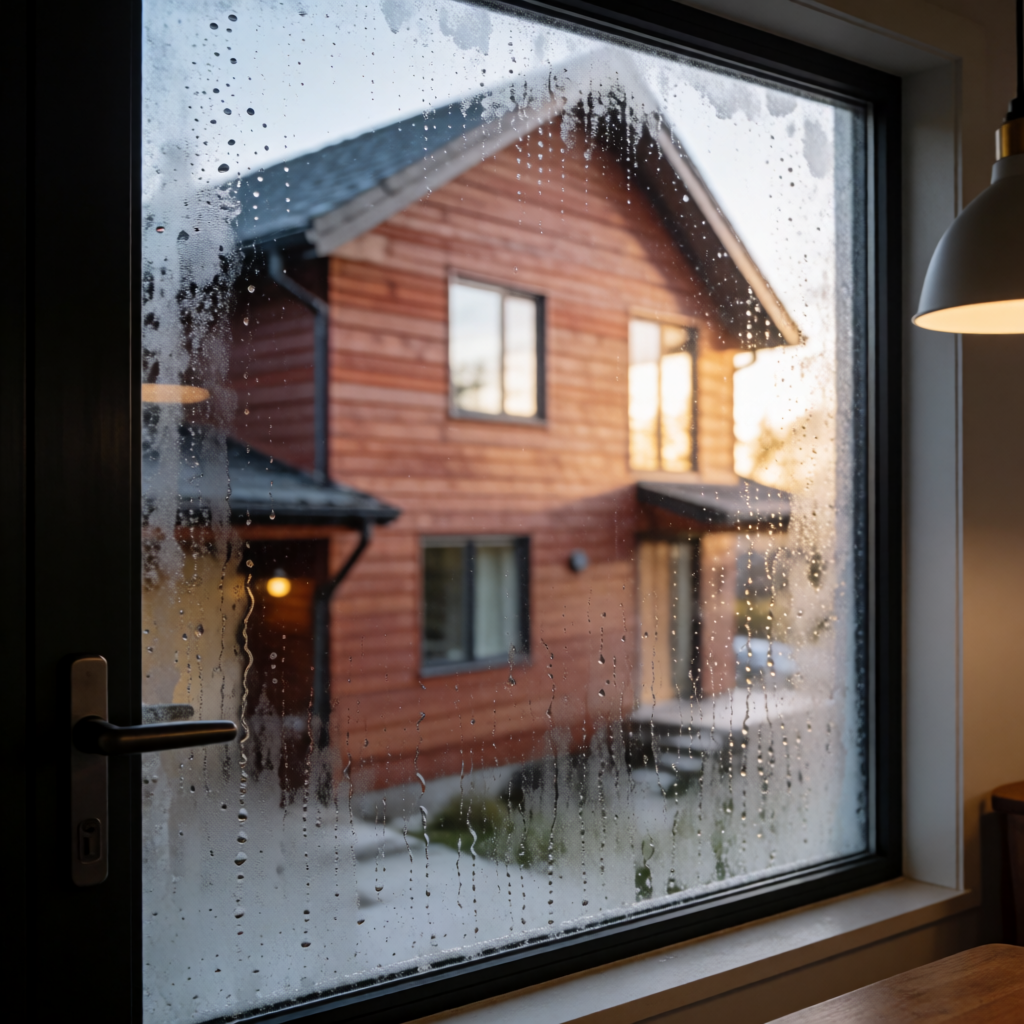
If you wake up to wet windows in the morning, you are probably seeing condensation on the inside of your windows. A little moisture can be normal, especially during cold weather, but persistent condensation can be a sign that there is too much humidity inside your home.
The good news is that you can often solve the problem yourself.
In this guide, we’ll explain why your windows are wet in the morning, what causes window condensation, and what you can do to prevent it.
Why Are My Windows Wet in the Morning?
The most common reason for wet windows in the morning is condensation.
When warm, humid air inside your home touches a cold window, the moisture in the air can turn into water droplets on the glass.
This is similar to what happens when you take a cold drink out of the refrigerator and the outside of the glass becomes wet.
During the night, your home can become more humid because of activities such as:
- Sleeping and breathing
- Taking showers
- Cooking
- Drying clothes indoors
- Using a humidifier
- Having poor ventilation
If the outdoor temperature is cold, the inside surface of your windows can become cold enough for condensation to form.
7 Common Reasons Your Windows Are Wet in the Morning
1. Your Home Has Too Much Humidity
High indoor humidity is one of the most common causes of condensation on windows.
The warmer the indoor air is, the more moisture it can hold. When that moist air reaches a cold window, the moisture can turn into water droplets.
If several windows are wet every morning, excessive indoor humidity is a likely cause.
A simple digital hygrometer can help you check the humidity level inside your home.
As a general rule, indoor humidity should usually be kept around 30% to 50%, although the ideal level can vary depending on outdoor temperature and your home.
2. Your Windows Are Very Cold
Even if your indoor humidity is not extremely high, condensation can appear when the glass becomes very cold.
This is more common during winter when there is a large difference between the temperature inside and outside.
Older windows, single-pane glass, or windows with poor insulation can become particularly cold.
The colder the glass, the easier it is for condensation to form.
3. Your Bathroom Is Adding Moisture to the Air
Showers and baths produce a lot of moisture.
If bathroom humidity is not properly exhausted, that moisture can spread throughout the house and eventually settle on colder windows.
Always use your bathroom exhaust fan while showering and leave it running for a while afterward.
If your bathroom fan does not seem to remove much moisture, check whether the fan is actually venting outdoors.
4. Cooking Is Increasing Indoor Humidity
Cooking can add a surprising amount of moisture to your home.
Boiling water, cooking pasta, using a kettle, and preparing soups can all release moisture into the air.
Use your range hood when cooking, especially when boiling or steaming food.
If possible, use a range hood that vents outdoors rather than simply recirculating air inside the kitchen.
5. You Dry Clothes Inside
Wet laundry releases water into the air as it dries.
If you regularly dry clothes indoors, especially in a small room with limited ventilation, indoor humidity can increase significantly.
That extra moisture may eventually appear as condensation on your windows.
If possible, dry clothes in a well-ventilated area or use a dryer.
6. Your Home Does Not Have Enough Ventilation
Modern homes can be relatively airtight, which is good for energy efficiency but can also trap moisture indoors.
If humid air has nowhere to escape, moisture can build up overnight.
Opening windows briefly when weather conditions allow, using bathroom and kitchen exhaust fans, and maintaining your home’s ventilation system can help reduce excess moisture.
7. Your Window Has a Seal Problem
Not all moisture around a window is caused by indoor condensation.
If you see moisture between the panes of a double- or triple-pane window, the problem may be a failed seal.
In that situation, wiping the glass will not solve the problem because the moisture is trapped inside the insulated glass unit.
This is different from normal condensation on the room-facing surface of the glass.
Is Condensation on Windows Normal?
Occasional condensation can be normal, particularly during very cold weather.
However, if your windows are wet every morning, the amount of water is significant, or the problem continues for a long period, it is worth investigating.
Persistent moisture around windows can contribute to:
- Mold growth
- Mildew
- Damaged window frames
- Peeling paint
- Damaged drywall
- Wood deterioration
The goal is not simply to wipe the water away every morning. You need to reduce the amount of moisture that is causing the condensation.
How to Stop Condensation on Windows
1. Check Your Indoor Humidity
Start by checking the humidity level in your home with a hygrometer.
If the humidity is high, reducing it may significantly improve the problem.
A dehumidifier can help in rooms where humidity tends to stay high.
2. Use Bathroom Exhaust Fans
Turn on the bathroom exhaust fan during showers and keep it running for a while afterward.
Make sure the fan is working properly and, where applicable, venting outdoors.
3. Use Your Kitchen Exhaust Fan
When cooking, use the range hood to remove steam and moisture before it spreads throughout your home.
4. Improve Air Circulation
Keep furniture, curtains, and other objects from completely blocking your windows or heating vents.
Better air circulation can help keep the inside surface of the glass warmer and reduce condensation.
5. Keep Your Home at a Consistent Temperature
Large temperature changes can contribute to condensation.
Keeping your home at a reasonably consistent temperature can help reduce the temperature difference between indoor air and cold window surfaces.
6. Reduce Indoor Sources of Moisture
Look for activities that add moisture to your home.
For example:
- Avoid drying large amounts of laundry indoors.
- Cover pots while cooking.
- Use exhaust fans when showering.
- Avoid running a humidifier when your indoor humidity is already high.
- Vent moisture-producing appliances properly.
7. Check Your Windows
Look closely at where the moisture appears.
If the water is on the room side of the glass, condensation caused by indoor humidity is likely.
If moisture appears between the glass panes, the insulated glass unit may have a failed seal.
If you see water around the frame, wall, or trim, there may be another problem, such as a leak or damaged seal.
When Should You Be Concerned?
A few droplets on your windows during a cold morning are not necessarily a serious problem.
You should investigate further if:
- Your windows are wet almost every morning.
- Water is running down the glass.
- Window frames are staying damp.
- You see mold or mildew.
- Paint or drywall around the window is becoming damaged.
- You notice moisture between double- or triple-pane glass.
- Condensation continues even after you reduce indoor humidity.
These signs can indicate that the issue is more than ordinary morning condensation.
Quick Checklist
If your windows are wet in the morning, start with these steps:
☐ Check your indoor humidity.
☐ Use bathroom exhaust fans during and after showers.
☐ Use your kitchen exhaust fan when cooking.
☐ Avoid drying laundry in poorly ventilated rooms.
☐ Improve air circulation around windows.
☐ Check for leaks around the window frame.
☐ Look for moisture between double- or triple-pane glass.
☐ Watch for mold, damaged paint, or damp drywall.
Bottom Line
Wet windows in the morning are usually caused by condensation. The most common cause is too much moisture in the indoor air combined with cold window glass.
Start by checking your home’s humidity and reducing sources of moisture such as showers, cooking, and indoor laundry. Improving ventilation and air circulation can also help.
If moisture is trapped between window panes or you notice water damage around the window, the problem may require a closer inspection.
A little condensation can be normal. Persistent or excessive moisture is a sign that your home needs attention.