
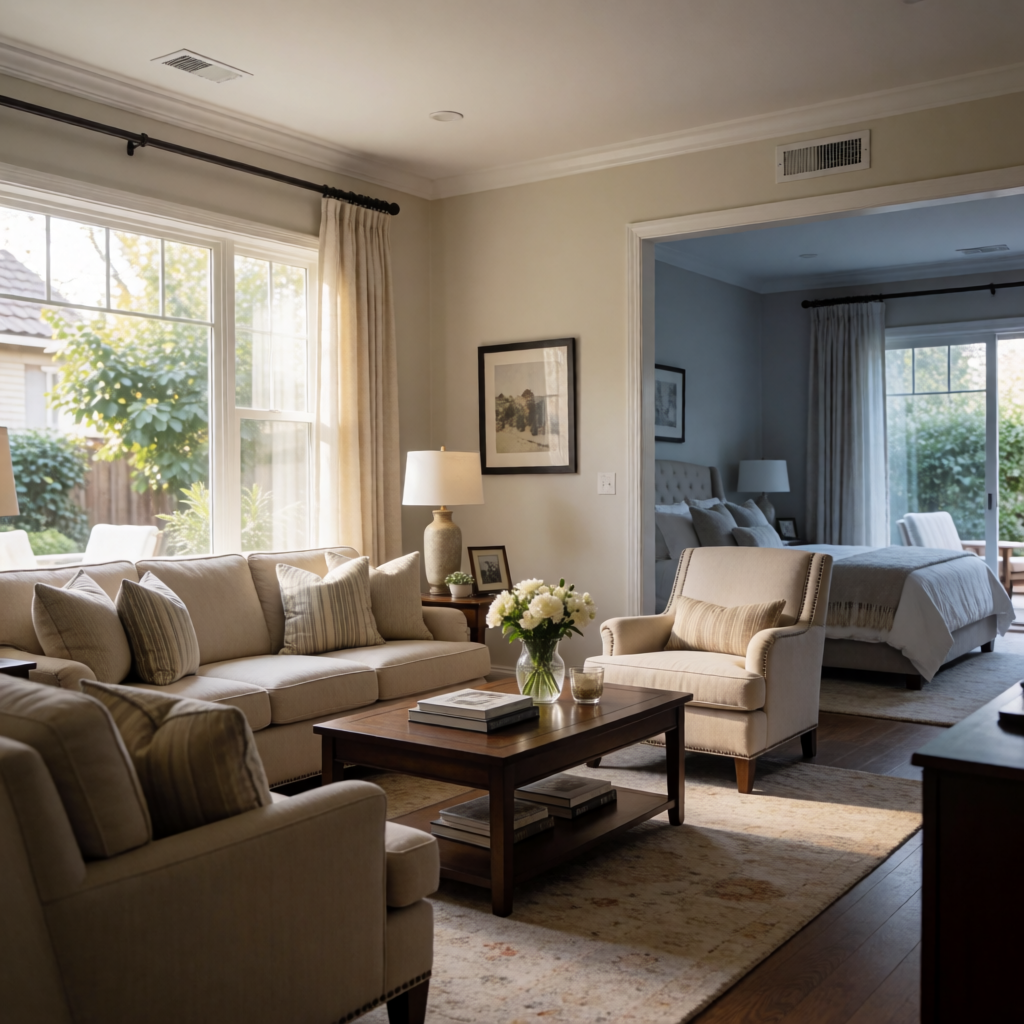
Does one room in your house always feel colder than the others, even when the thermostat says your home is warm?
If you are wondering why one room is colder than the rest of the house, the problem is often related to airflow, insulation, windows, doors, or the way heat moves through your home.
You don’t necessarily need to replace your heating system. In many cases, you can find the cause yourself and make the room more comfortable with a few simple checks.
Why Is One Room Colder Than the Rest of the House?
A room can feel colder when it is not receiving enough warm air or when it loses heat faster than other rooms.
Common causes include:
- A blocked or closed heating vent
- Poor airflow
- A dirty air filter
- Drafts around windows or doors
- Poor insulation
- An exterior wall
- A room located above a garage or crawl space
- A poorly balanced heating system
- Furniture blocking a vent or radiator
- Problems with ductwork
The first step is to determine whether the room is not getting enough heat or is losing heat too quickly.
8 Common Reasons One Room Is Colder
1. The Heating Vent Is Blocked
Start with the simplest possibility.
Check the heating vents or registers in the cold room. Furniture, rugs, curtains, or other objects may be blocking the airflow.
Place your hand over the vent while the heating system is running.
You should feel warm air coming into the room.
If the airflow is weak compared with other rooms, there may be an airflow problem.
2. The Air Filter Is Dirty
A dirty furnace or HVAC filter can restrict airflow throughout the house.
Although a dirty filter may affect the entire system, some rooms can feel the problem more than others.
Check your filter regularly and replace it according to the manufacturer’s recommendations.
If you replace the filter and the cold room still receives very little airflow, there may be another problem with the ductwork or heating system.
3. The Room Has Poor Air Circulation
Heat does not always distribute evenly throughout a house.
A room with closed doors, blocked vents, or poor circulation may receive less warm air than other areas.
Try keeping the interior door open and make sure furniture is not blocking heating vents.
Ceiling fans can also help circulate air when used appropriately. During the heating season, a ceiling fan set to a low speed can help move warm air downward.
4. There Are Drafts Around the Windows or Door
A room can feel cold even when the heating system is working correctly if warm air is escaping through gaps.
Check around:
- Window frames
- Exterior doors
- Door thresholds
- Baseboards
- Electrical outlets on exterior walls
On a cold or windy day, you may be able to feel a draft with your hand.
If you also notice moisture or condensation around the window, there may be a separate window problem worth investigating.
5. The Room Has Poor Insulation
Insulation helps slow down heat loss.
Rooms with exterior walls, ceilings, floors above unheated spaces, or areas over garages can sometimes be colder because they lose heat more quickly.
If the walls or floor feel unusually cold, poor insulation may be contributing to the problem.
Adding insulation can be more involved than the other solutions in this guide, so first rule out simpler causes such as blocked vents and drafts.
6. The Room Is Above a Garage or Crawl Space
Rooms located above unheated spaces can be noticeably colder.
A garage, crawl space, basement, or other unheated area underneath the room may allow more heat to escape through the floor.
If the floor feels particularly cold compared with the rest of the house, check whether there is adequate insulation underneath it.
7. The Heating System Is Not Balanced
In some homes, the heating system does not distribute warm air evenly.
For example, rooms close to the furnace may receive more airflow while rooms farther away receive less.
If several rooms have uneven temperatures, rather than just one, the problem may be related to the heating system or ductwork.
If you have adjustable vents, you can sometimes improve comfort by slightly reducing airflow in warmer rooms. Avoid completely closing vents unless your heating system manufacturer specifically allows it.
8. The Ductwork May Have a Problem
If the cold room has a heating vent but very little air comes out, the duct supplying that room may have a problem.
Possible issues include:
- A disconnected duct
- A crushed or damaged duct
- Leaks in the ductwork
- Poorly insulated ducts
- An obstruction
This can be difficult to diagnose without access to the ductwork, but comparing airflow from different vents can give you a useful clue.
How to Find the Cause of a Cold Room
Before spending money on repairs, work through these simple checks.
Step 1: Compare the Temperature
Use an inexpensive indoor thermometer to compare the cold room with another room.
Do not rely only on how the room feels.
If one room consistently has a noticeably lower temperature, you have confirmed that the problem is more than just a difference in perception.
Step 2: Check the Heating Vent
Make sure the vent is completely open and not blocked by furniture or rugs.
Then compare the airflow with a vent in a warmer room.
Step 3: Check for Drafts
Slowly move your hand around windows, doors, and other possible openings.
Cold air entering the room can make a significant difference, especially during windy weather.
Step 4: Check the Air Filter
A dirty filter can restrict airflow.
Replace it if necessary and check whether the room becomes warmer after the heating system has had time to operate normally.
Step 5: Look at the Room’s Location
Ask yourself:
- Is the room on an exterior corner?
- Is it above a garage?
- Is it above a crawl space?
- Is it directly below an attic?
- Does it have large windows?
- Is it farther from the furnace than other rooms?
The location of the room can help identify where heat is being lost.
How to Make a Cold Room Warmer
Once you identify the likely cause, start with the easiest solution.
Improve Airflow
Remove anything blocking the heating vent.
Keep furniture and curtains away from registers and radiators.
Seal Small Drafts
Weatherstripping and caulk can help reduce small air leaks around windows and doors.
If you can see daylight around an exterior door or feel a noticeable draft, sealing the opening may make the room more comfortable.
Keep Interior Doors Open
If appropriate, keeping the door open can improve air circulation between rooms.
However, this is not a substitute for fixing a significant heating or insulation problem.
Use Curtains Strategically
During cold weather, closing curtains or blinds at night can reduce heat loss through windows.
During sunny winter days, opening curtains on sun-facing windows can allow sunlight to warm the room naturally.
Check Your Windows
Cold or poorly insulated windows can contribute to heat loss.
Look for:
- Drafts
- Damaged weatherstripping
- Cracked seals
- Condensation
- Damaged frames
If your windows are also wet in the morning, read our guide on why windows become wet in the morning to understand whether indoor humidity and condensation may be contributing to the problem.
Consider Insulation
If the room remains cold despite good airflow and no obvious drafts, insulation may be the next thing to investigate.
This is especially important for rooms above garages, crawl spaces, or other unheated areas.
Should You Close Vents in Warmer Rooms?
You may be tempted to completely close vents in warmer rooms to force more heat into the cold room.
This is not always a good idea.
Depending on the design of your heating system, closing too many vents can affect airflow and system performance.
If your home has significantly uneven heating, it is better to investigate the underlying cause rather than simply closing vents throughout the house.
When a Cold Room May Need Professional Help
Some problems are difficult to diagnose without specialized equipment or access to parts of the heating system.
Consider getting professional help if:
- The heating vent has almost no airflow.
- You suspect a disconnected or damaged duct.
- Several rooms have major temperature differences.
- Your furnace or heat pump is not heating properly.
- You suspect serious insulation problems.
- You notice signs of moisture or water damage.
- The room remains significantly colder despite improving airflow and sealing obvious drafts.
The goal is to identify the cause rather than simply turning up the thermostat.
Quick Cold Room Checklist
Before calling for help, check:
☐ Is the heating vent open?
☐ Is anything blocking the vent?
☐ Is the airflow weaker than in other rooms?
☐ Is the HVAC filter dirty?
☐ Can you feel drafts around windows or doors?
☐ Is the room above a garage or crawl space?
☐ Does the room have exterior walls?
☐ Are the windows poorly sealed?
☐ Is the floor or wall unusually cold?
☐ Are other rooms also experiencing uneven heating?
These simple checks can help you narrow down the cause.
Bottom Line
If you are wondering why one room is colder than the rest of the house, start with airflow, drafts, and the room’s location.
A blocked vent, dirty filter, poor circulation, drafty window, or inadequate insulation can all make one room noticeably colder.
Start with the simple checks before assuming you need an expensive heating repair. In many cases, identifying where the room is losing heat is the first step toward making it warmer and more comfortable.