
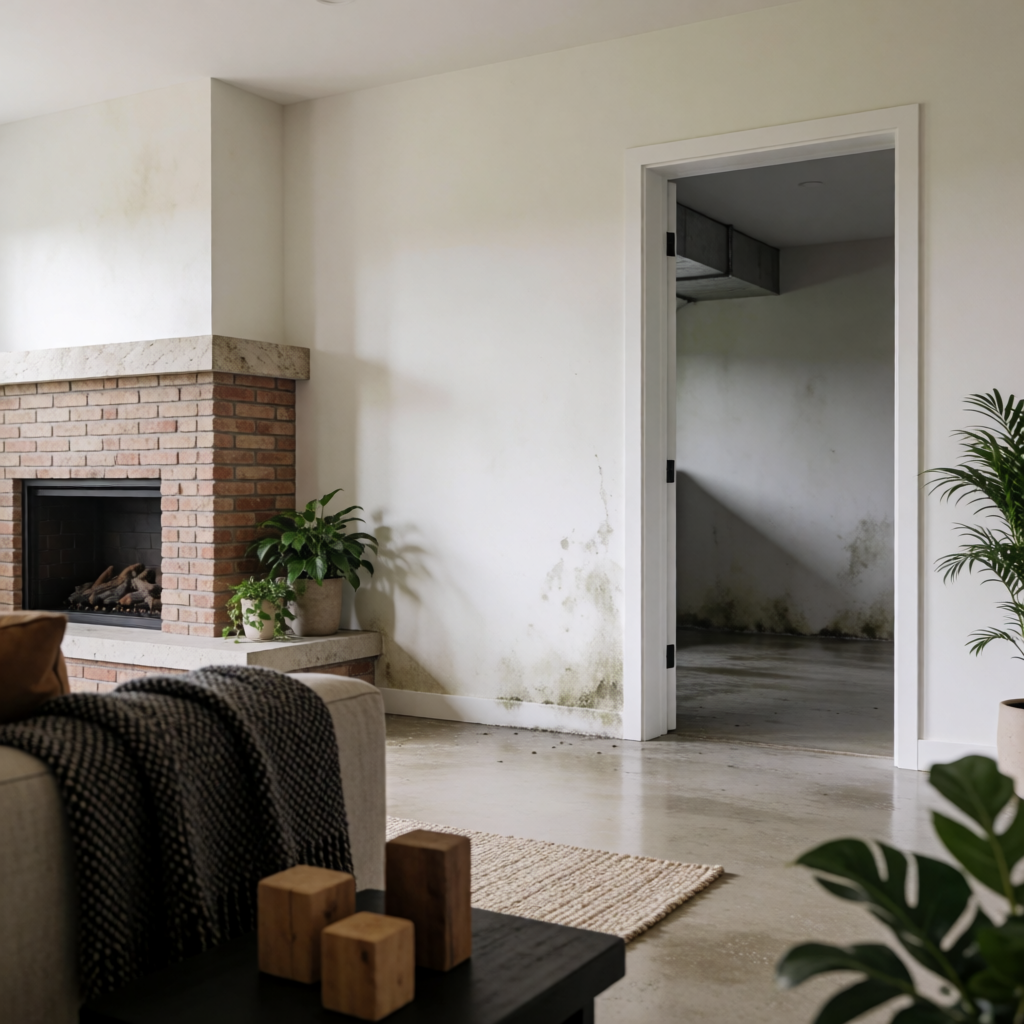
Why Does My House Smell Musty? 8 Common Causes and Fixes
Does your house smell musty even though you clean regularly?
A musty smell in the house is often a sign that moisture is present somewhere it should not be. The source may be obvious, such as a damp basement or wet carpet, but sometimes the moisture is hidden behind walls, under flooring, around windows, or near plumbing.
If you’re wondering why your house smells musty, don’t start by covering the odor with air fresheners. Start by finding where the smell is coming from.
In many cases, you can investigate the problem yourself and fix the underlying cause.
Problem: Your House Smells Musty
A musty odor can come from several different areas of a home.
Common causes include:
- High indoor humidity
- A damp basement or crawl space
- Mold or mildew
- A plumbing leak
- Wet carpet or upholstery
- Water leaking around windows
- Poor bathroom ventilation
- Water damage that was never completely dried
Mold can produce compounds associated with the familiar musty or moldy odor. The presence of a musty smell does not tell you exactly where the problem is, but it is a useful reason to investigate areas where moisture may be present.
Causes: 8 Reasons Your House May Smell Musty
1. Indoor Humidity Is Too High
One of the first things to check is the humidity inside your home.
Everyday activities such as showering, cooking, drying clothes, and even normal occupancy add moisture to indoor air. If that moisture is not removed through ventilation or dehumidification, humidity can build up.
The EPA recommends keeping indoor relative humidity below 60%, with 30% to 50% being the ideal range when possible.
A small digital hygrometer can tell you whether humidity is higher than it should be.
If your home consistently stays above the recommended range, reducing humidity may help prevent the conditions that allow mold to grow.
2. Your Basement or Crawl Space Is Damp
Basements and crawl spaces are common sources of a musty smell in a house.
Look for:
- Damp floors
- Wet walls
- Condensation on pipes
- Water stains
- Damp cardboard
- Musty-smelling stored items
- Visible mold
- Standing water
Pay particular attention after heavy rain or snowmelt.
If the smell is strongest in the basement, the source may be moisture entering through the foundation, plumbing, floor, or walls.
Don’t simply clean the smell away. Find out why the area is damp.
3. There May Be Mold or Mildew
Mold can grow when moisture remains on or inside materials.
It can develop on:
- Drywall
- Wood
- Carpet
- Upholstery
- Paper
- Cardboard
- Insulation
- Wallpaper
- Dust and other organic materials
Mold does not always appear as an obvious black or green patch. Sometimes the first clue is an unusual musty odor.
If you can smell mold but cannot see it, look for damp areas and signs of previous water damage.
The EPA explains that mold can grow when spores land on damp surfaces and that controlling moisture is the key to controlling indoor mold growth.
4. There Could Be a Hidden Plumbing Leak
A small plumbing leak can create a musty smell long before you notice a large amount of water.
Check around:
- Under sinks
- Behind toilets
- Around bathtubs
- Near washing machines
- Around water heaters
- Under cabinets
- Near exposed plumbing pipes
Look for discoloration, swollen materials, peeling paint, or damp spots.
If the smell is strongest around one particular area, investigate that location first.
A hidden leak that continues for a long time can keep building materials damp and create conditions where mold can grow.
5. A Window May Be Letting in Moisture
Windows can be another source of moisture.
Check around the window frame for:
- Water stains
- Peeling paint
- Damp drywall
- Mold spots
- Damaged caulking
- Condensation
- Soft or damaged wood
If your windows are also wet in the morning, indoor humidity may be contributing to condensation.
You can read our guide [Why Are My Windows Wet in the Morning?] to learn more about window condensation and indoor moisture.
6. Wet Carpet or Upholstery May Be Holding the Odor
Carpet, rugs, mattresses, sofas, and other fabrics can absorb moisture and odors.
This can happen after:
- A plumbing leak
- A basement flood
- A spilled liquid
- Excessive humidity
- Carpet cleaning
- Water entering through a door or window
If a particular room smells musty, move furniture and inspect the floor underneath it.
Don’t assume the carpet is dry simply because the surface feels dry. Moisture can remain underneath carpet or padding.
7. Poor Ventilation Can Trap Moisture
If your home does not have enough air circulation, moisture from normal activities can remain indoors.
Bathrooms and kitchens are particularly important.
Use exhaust fans when:
- Showering
- Cooking
- Running the dishwasher
Where applicable, make sure exhaust fans actually vent outdoors.
The EPA recommends adequate ventilation and the use of exhaust fans to help control indoor moisture.
8. Previous Water Damage Was Never Completely Resolved
Sometimes the source of a musty smell is an old problem.
For example, a previous:
- Roof leak
- Flood
- Plumbing leak
- Basement leak
- Appliance leak
- Window leak
may have left moisture inside building materials.
Even if the original leak was repaired, materials that remained damp may still cause problems.
If your home smells musty after previous water damage, inspect the affected area rather than simply treating the odor.
Simple Checks: How to Find Where the Musty Smell Comes From
If you don’t know where the smell originates, don’t inspect the entire house randomly.
Work through the house systematically.
Step 1: Find the Strongest-Smelling Room
Walk through each room and compare the smell.
Is the odor strongest in:
- The basement?
- A bathroom?
- A bedroom?
- The laundry room?
- Under the kitchen sink?
- Near a particular window?
Finding the strongest area gives you a starting point.
Step 2: Check Humidity
Use a hygrometer to measure indoor humidity.
If the humidity is consistently high, moisture may be contributing to the problem.
Step 3: Look for Visible Moisture
Check ceilings, walls, floors, windows, pipes, and areas underneath sinks.
Look for:
- Water stains
- Dampness
- Discoloration
- Peeling paint
- Swollen wood
- Condensation
Step 4: Check Hidden Areas
Don’t forget places that are easy to overlook.
Move stored boxes away from basement walls and inspect behind furniture.
Check underneath sinks and around appliances.
Step 5: Think About Recent Water Events
Ask yourself:
Has this area recently experienced a leak, flood, spill, condensation problem, or plumbing repair?
The answer may point directly toward the source.
DIY Solution: How to Get Rid of a Musty Smell
The best way to get rid of a musty smell is to remove the source of moisture, not simply cover the odor.
1. Reduce Indoor Humidity
If humidity is high, use:
- A dehumidifier
- Air conditioning when appropriate
- Bathroom exhaust fans
- Kitchen ventilation
- Better air circulation
Keep indoor humidity within a reasonable range, ideally around 30% to 50% when possible.
2. Dry Damp Areas
If you discover a small wet area, dry it as soon as possible.
Use fans or a dehumidifier to help remove moisture from the area.
The EPA recommends drying wet or damp materials quickly, ideally within 24 to 48 hours, to reduce the chance of mold growth.
3. Fix the Source of the Water
If you find a leak, fix it.
Cleaning the affected surface without fixing the leak only addresses the symptom.
The same principle applies to:
- Condensation
- Foundation moisture
- Roof leaks
- Plumbing leaks
- Poor bathroom ventilation
Moisture control is the foundation of mold control.
4. Clean Small Moldy Areas Carefully
For a small amount of visible mold on a suitable hard surface, cleaning may be possible.
The EPA notes that small mold areas can often be handled by homeowners, while larger areas or extensive water damage may require professional remediation.
Follow the cleaning product instructions and protect yourself appropriately.
Do not disturb large areas of mold unnecessarily.
5. Remove Materials That Cannot Be Properly Dried
Some porous materials can absorb water deeply.
Examples include:
- Carpet padding
- Certain ceiling tiles
- Some upholstered materials
- Damaged drywall
- Heavily soaked insulation
If a material cannot be thoroughly dried and cleaned, replacement may be necessary.
What Not to Do
❌ Don’t just use air freshener
Air fresheners may temporarily cover the smell, but they do not solve the moisture problem.
❌ Don’t paint over mold
Painting over a damp or moldy surface does not remove the underlying problem.
The moisture source should be addressed first.
❌ Don’t ignore a musty smell
A persistent musty odor deserves investigation, especially when accompanied by dampness or visible mold.
❌ Don’t keep wet materials indoors
Wet carpet, cardboard, clothing, or other materials can continue adding moisture to the environment.
Dry or remove them as soon as possible.
❌ Don’t assume bleach solves everything
Cleaning a surface does not fix a leaking pipe, wet wall, roof leak, or high indoor humidity.
The moisture problem still needs to be corrected.
When to Call for Help
A small, localized moisture problem may be something you can handle yourself.
However, consider professional help when:
- The moldy area is extensive.
- There has been significant water damage.
- You cannot find the source of the moisture.
- Mold keeps coming back after cleaning.
- The smell is strong but the source appears hidden.
- Drywall, insulation, flooring, or other building materials are extensively damaged.
- You suspect a serious plumbing or roof leak.
- Sewage or contaminated water was involved.
The EPA notes that mold areas larger than about 10 square feet generally warrant a different level of remediation guidance than small areas that homeowners may be able to handle themselves.
If the moisture problem is extensive, don’t keep opening walls or disturbing contaminated materials just to locate the smell.
Quick Checklist
If your house smells musty, work through this checklist:
☐ Check indoor humidity.
☐ Look for water stains.
☐ Inspect the basement or crawl space.
☐ Check around windows.
☐ Look under sinks and around plumbing.
☐ Inspect carpet and upholstery for dampness.
☐ Check bathrooms for poor ventilation.
☐ Look for visible mold.
☐ Think about previous leaks or flooding.
☐ Fix the source of moisture.
☐ Dry wet materials quickly.
☐ Clean or replace materials that cannot be properly dried.
Bottom Line
If you’re wondering why your house smells musty, moisture is one of the first things to investigate.
The source could be high indoor humidity, a damp basement, poor ventilation, condensation, a plumbing leak, wet carpet, or hidden water damage.
Don’t simply cover the odor with an air freshener. Find the moisture source, fix it, and dry the affected area.
If you find extensive mold or water damage, or you cannot determine where the smell is coming from, getting professional help is the safer approach.