
I Suddenly Have Ants in My Kitchen — What Should I Do?
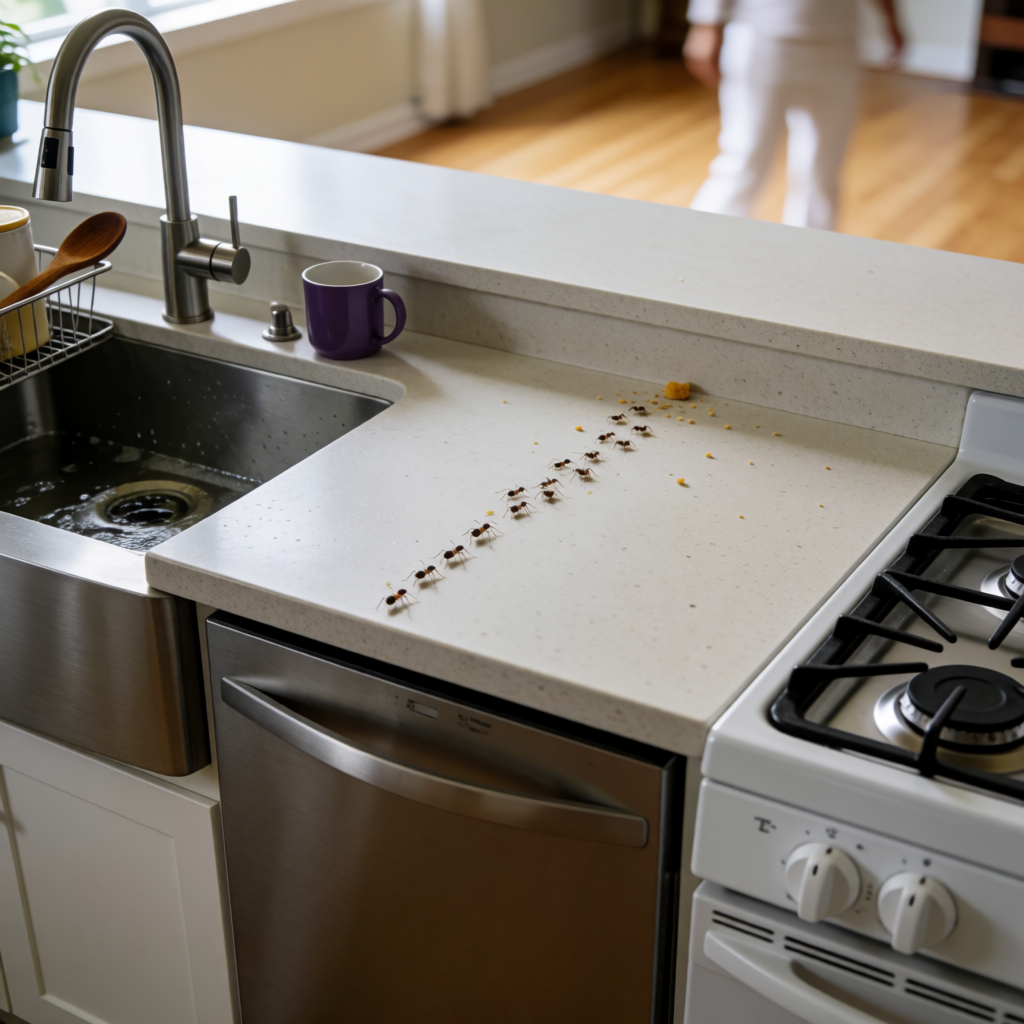
You walk into the kitchen and notice a few ants near the counter. A little later, there are more around the sink, pantry, or floor.
If ants seem to have appeared out of nowhere, there is usually a reason. They may have found something useful inside your kitchen, followed a scent left by another ant, or discovered an entry point around a window, wall, pipe, or door.
The good news is that seeing a few ants does not automatically mean you have a serious infestation. Before reaching for insecticide, it is worth finding out what is bringing them inside.
Problem: Ants Have Suddenly Appeared in the Kitchen
A small trail of ants can be surprisingly difficult to explain. The kitchen may look clean, there may be no obvious spilled food, and yet the insects keep coming back.
Ants are constantly searching for resources. Once one finds something worthwhile, it can leave a chemical trail that helps other ants locate the same spot.
That is why you may see only two or three ants at first and then notice a much longer trail later.
The most useful first step is not killing every ant you see. It is figuring out where they are coming from and what they are looking for.
Causes: What Could Be Bringing Them Inside?
Several everyday conditions can make a kitchen attractive to ants.
Food residue
Crumbs, grease, sugary drinks, pet food, and food residue around appliances can provide enough of a reward for ants to investigate.
Pay particular attention to places that are not cleaned every day, such as:
- Under the toaster or coffee maker
- Behind small kitchen appliances
- Around the garbage and recycling bins
- Under cabinets
- Along the edge of the floor
- Inside pantry corners
You may not notice the residue yourself, but ants can detect food sources that are easy for humans to miss.
Water and damp areas
Your kitchen also provides access to water. A dripping faucet, damp cabinet, wet sponge, condensation, or a slow leak beneath the sink may encourage ants to stay nearby.
Look especially closely around plumbing connections and the back of cabinets.
A hidden entry point
Ants can enter through surprisingly small gaps. Common routes include cracks around windows, gaps beside pipes, openings around cabinets, and spaces where walls meet floors.
If you repeatedly see ants following the same path, watch the trail for a few minutes before cleaning it away. It may lead you directly to their entry route.
Outdoor activity
Sometimes the source is outside the house.
Plants touching the exterior wall, mulch near the foundation, cracks around doors, or ant activity close to the kitchen wall can provide a route indoors.
Simple Checks: Find the Source Before Treating It
Before using any product, spend a few minutes observing.
Start where you see the greatest number of ants and follow the trail in both directions.
Ask yourself:
- Where are they entering?
- Are they heading toward food?
- Are they gathering around the sink?
- Do they disappear beneath a cabinet?
- Are they coming from a window or door?
- Is there a damp or damaged area nearby?
Also check cupboards and food-storage areas.
Look for opened packages, sticky residue, forgotten crumbs, or signs that ants have reached a food container.
If you can identify the route, dealing with the problem becomes much easier.
DIY Solution: Remove the Attraction and Block the Route
Once you have a good idea of what is happening, start with simple measures.
1. Remove anything attracting them
Wipe counters and other affected surfaces. Clean crumbs and food residue, empty garbage when necessary, and avoid leaving dirty dishes sitting overnight.
Store sugar, cereal, snacks, pet food, and other attractive foods in containers that close securely.
2. Clean the ant trail
After removing the food source, clean the path where the ants were travelling.
This helps remove the scent trail that other ants may be following.
Do not simply wipe the visible ants away and leave the surrounding area untouched. The trail may extend farther than the insects you can see.
3. Reduce moisture
Repair small leaks when possible. Dry the area beneath the sink, replace constantly wet sponges, and make sure water is not collecting around the faucet or countertop.
If you discover a leak inside a cabinet, deal with the source rather than only drying the surface.
4. Seal accessible gaps
Once you know where ants are getting in, close the opening if it is safe and practical to do so.
Depending on the location, this might involve caulk around a small crack or sealing a gap around a pipe.
Do not seal a suspected electrical opening or interfere with wiring just to stop ants. If the location presents an electrical or structural concern, leave it to a professional.
5. Consider ant bait
If ants continue returning after cleaning and removing food sources, an appropriate household ant bait can sometimes be more useful than spraying individual insects.
The workers may carry the bait back toward the colony.
Always read and follow the product label, especially if children or pets live in the home.
6. Be Patient With Bait
One common mistake is expecting ants to disappear immediately after placing bait.
Some ant baits work slowly because the objective is for workers to carry the bait back to the colony.
University of Minnesota Extension notes that bait can take time to eliminate a colony.
If ants are actively feeding on the bait, don’t immediately spray them with insecticide.
Spraying can interfere with the ants’ ability to carry the bait back to the colony.
What Not to Do
A few common reactions can make the situation harder to manage.
Don’t spray every ant immediately. Killing the visible insects does not necessarily address the source.
Don’t leave food exposed while treating the area. Ants may simply return to the same food source after the treatment.
Don’t ignore a recurring trail. If ants keep appearing in exactly the same location, there is probably an accessible route or attraction worth investigating.
Don’t mix household chemicals. Combining cleaning products or pest-control products can create dangerous fumes.
Don’t seal every crack before understanding the route. If you block one entrance while another remains available, the ants may simply change direction.
Don’t use outdoor pesticides indoors Never assume that a product intended for outdoor use is safe to use inside your kitchen.
The EPA specifically advises consumers not to use outdoor chemicals indoors and to follow pesticide labels carefully.
When to Call for Help
Occasional ants can often be handled with basic cleaning, moisture control, and sealing.
Professional help becomes more reasonable when the problem keeps returning despite your efforts.
Consider getting assistance if:
- Ant activity continues for several days despite removing food and water sources.
- You regularly see large numbers of ants.
- Ants are appearing from inside walls, ceilings, or other inaccessible areas.
- You find signs of moisture damage at the same location.
- You cannot identify where they are entering.
- You suspect a species that may cause structural problems.
If you are unsure what type of ant you are dealing with, taking a clear photo can also help with identification before choosing a treatment.
Quick Checklist
When ants suddenly appear in your kitchen:
☐ Follow the trail instead of immediately spraying it.
☐ Look for crumbs, grease, sugar, or food residue.
☐ Check beneath and behind appliances.
☐ Inspect the sink and plumbing area for moisture.
☐ Look around windows, doors, cabinets, and pipe openings.
☐ Clean the surfaces where ants have been travelling.
☐ Store food in tightly closed containers.
☐ Dry damp areas and address small leaks.
☐ Seal suitable cracks or gaps once the route is identified.
☐ Consider household ant bait if activity continues.
☐ Get professional assistance if the problem persists or appears unusually extensive.
Bottom Line
Sudden ant activity in a kitchen usually means the insects have discovered something useful: food, water, shelter, or an easy way inside.
Instead of concentrating only on the ants you can see, look for the reason they are visiting your kitchen.
Find their route, remove whatever is attracting them, clean away the trail, control moisture, and close practical entry points.
If the ants continue appearing despite those steps, the source may be hidden or more extensive than it first appeared. In that situation, professional pest advice can save you from repeatedly treating the same problem without finding its cause.