
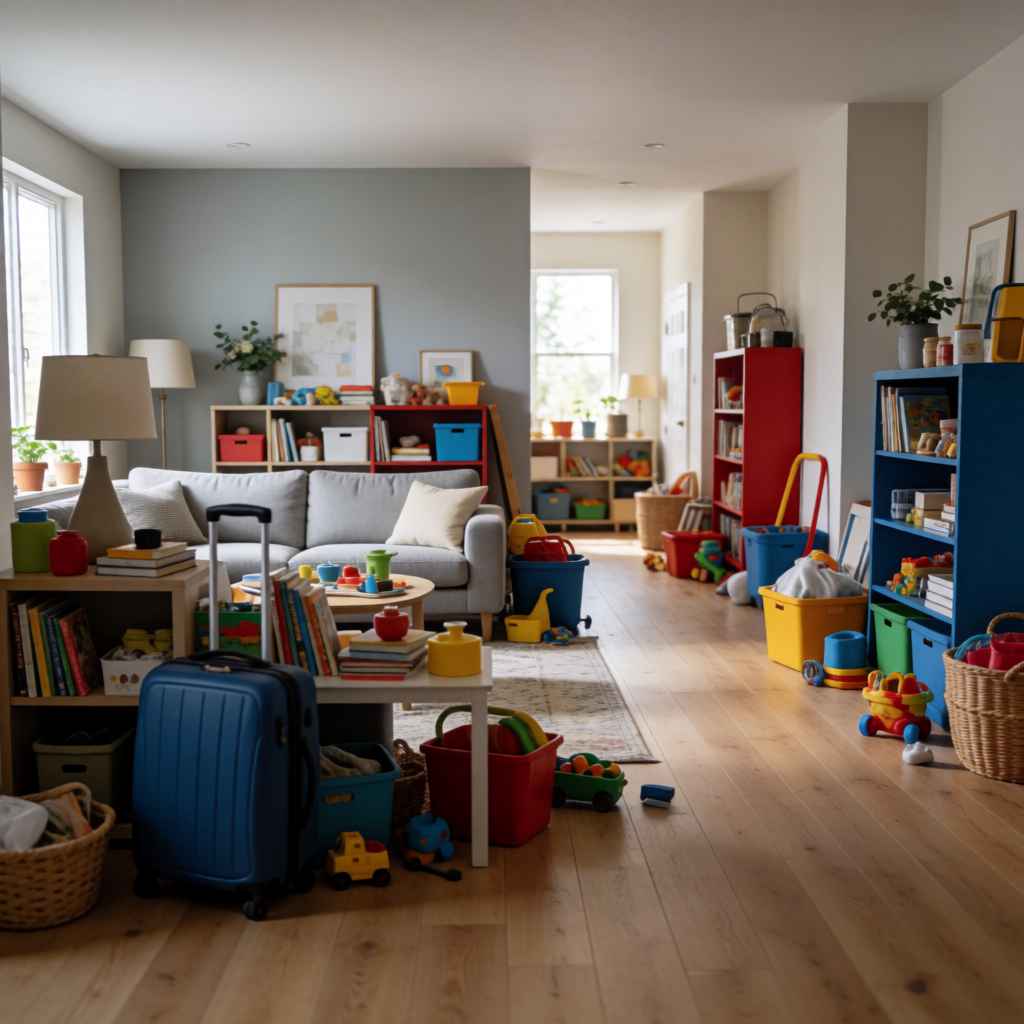
My Home Always Feels Cluttered, What Can I Do?
You clean the house, put a few things away, and everything looks better for a while. Then, somehow, the kitchen counter fills up again, the dining table becomes a storage area, and the living room starts looking crowded.
If this happens regularly, the problem may not be that your home is dirty. You may simply have more belongings moving through your rooms than your current storage and daily habits can handle.
The good news is that you do not have to reorganize the entire house in one weekend. Changing a few of the habits that create the mess can make the room much less frustrating to deal with.
Why Does My Home Keep Looking Cluttered?
Clutter usually develops from small everyday decisions rather than one big event.
A bag gets left beside the door because you will need it tomorrow. A receipt stays on the counter because you have not decided what to do with it. A charger remains plugged in because it is easier than putting it away.
One item is not a problem. The difficulty starts when dozens of small decisions create permanent piles.
Here are some common reasons it happens.
1. Frequently used things keep getting left in convenient spots
Think about the objects you handle almost every day.
Keys, mail, jackets, chargers, school items, bags, toys, and reusable shopping bags often end up wherever they are easiest to drop.
If returning something to its storage place takes several steps, people naturally choose the easier option.
This does not necessarily mean you need another cabinet. It may mean that an everyday item needs a more convenient place to live.
2. Your storage is full before the day even starts
Open a closet or kitchen cabinet that always seems difficult to use.
Can you easily see what is inside?
Are things stacked on top of other things? Do you have to move several objects to reach something at the back?
When storage becomes difficult to access, belongings tend to migrate onto shelves, counters, chairs, and floors instead.
The problem may have less to do with the number of shelves and cabinets than with what is already filling them. The problem is that too much is already occupying the storage you have.
3. Flat surfaces become temporary storage
Tables and counters are particularly good at collecting things.
A small pile of mail appears. Then someone puts a bag beside it. A pair of headphones joins the pile. Before long, the surface has become the place where unfinished decisions are stored.
Look around your home and identify the surfaces that repeatedly become collection points.
That observation can tell you more about your clutter than buying another storage box.
4. You are keeping things because getting rid of them feels risky
Some possessions remain in a home for years because their owner thinks they might become useful someday.
It could be an old cable, an extra kitchen item, a piece of furniture, a container, or something bought for a project that never happened.
The question is not whether the item could be useful one day.
A more useful question is:
Has this item earned the space it occupies today?
There is no reason to empty your home simply to make it look more organized. The goal is to become more deliberate about what stays.
5. The clutter is being moved instead of resolved
This is an easy trap.
You clear the dining table by moving everything to the kitchen counter. Later, the counter gets cleared by putting those things in the bedroom.
The house looks better for a few hours, but nothing has actually changed.
If an object keeps travelling from one room to another, it probably needs a decision rather than another temporary hiding place.
6. Some storage areas are holding things you rarely use
A crowded closet can contain items that have not been touched for months or years.
That makes the storage space less useful for the belongings you actually use.
Leave the other closets alone for now; one small storage area is enough to start. Choose one small section and look at what is taking up the most room.
You may discover that the easiest way to create usable space is to remove a few things rather than add more furniture.
Which Parts of My Home Keep Creating the Mess?
Do not start by cleaning the whole house.
Instead, choose one room that bothers you the most.
Spend a few minutes simply looking around.
Look at the surfaces
Which table, counter, shelf, or chair attracts the most objects?
Ask yourself why people put things there.
Is it because that location is convenient? Is there no nearby storage? Or does nobody know where those items are supposed to go?
Look at the floor
Pay attention to anything sitting on the floor that normally belongs somewhere else.
Shoes, bags, toys, boxes, laundry, paperwork, and household supplies can reveal where your storage system is failing.
Open one storage space
Pick one drawer, cabinet, shelf, or closet.
Do not reorganize it yet.
Just notice whether the contents are things you regularly use or things that have simply accumulated over time.
Notice what comes back
After you clean the room, pay attention to what returns during the next few days.
Those recurring objects are the most important ones to solve.
If the same five items keep appearing on the same table, that is a useful clue.
What Changes Will Actually Make the House Look and Feel Better?
You do not need a complicated organization system.
Start with the areas you see and use every day.
Give everyday objects a landing place
Choose a practical location for items that regularly appear around the house.
For example, you might keep keys near the entrance, charging cables in one accessible drawer, or school items in a specific basket.
The best location is usually the one people will actually use.
A perfect system that requires too much effort will not last.
Create one place for things that need attention
Some belongings cannot be put away immediately.
Maybe you need to answer a letter, return an item, repair something, or decide whether to keep it.
Instead of allowing these objects to spread across several surfaces, give them one temporary location.
This keeps unfinished tasks visible without letting them take over the room.
Deal with paper before it becomes a pile
Mail, receipts, school notices, instructions, and other paperwork can quickly make a clean room look crowded.
When possible, decide what should happen to a piece of paper when you first handle it.
Recycle it, file it, respond to it, or place it somewhere specifically designated for action.
The important part is avoiding the creation of a permanent “I’ll deal with this later” pile.
Look for duplicates
You may have several versions of the same thing without realizing it.
Check kitchen utensils, cleaning supplies, reusable containers, cables, tools, and other household items.
If several objects perform the same job, decide how many you realistically need.
You do not have to become a minimalist. You simply want the number of belongings to match the way your household actually operates.
Make the entrance easier to manage
The entrance is often where clutter begins.
Shoes, coats, bags, keys, mail, umbrellas, and shopping bags arrive there every day.
A small basket, hook, shelf, or designated spot can prevent these objects from spreading farther into the house.
The system does not have to look fancy. It needs to be easy enough that everyone can use it without thinking.
Leave some empty space
A shelf does not have to be filled completely.
Neither does a countertop, drawer, closet, or cabinet.
Keeping a little room available makes it easier to put something away when the day gets busy.
It also gives you a better idea of whether you actually need more storage.
Do a short reset instead of waiting for a huge cleanup
A few minutes at the end of the day can make a noticeable difference.
Return obvious items to their places. Take dishes to the kitchen. Put shoes together. Clear one surface.
You are not trying to make the house perfect.
You are simply preventing several small messes from becoming tomorrow’s large cleanup.
What Should I Avoid When Decluttering?
Decluttering can create another problem if you make the process unnecessarily complicated.
Do not buy storage containers first
It is tempting to visit a store and buy baskets, bins, shelves, and organizers.
But if you have not decided what you actually need to keep, those products may simply give unused belongings a nicer place to sit.
Work out what needs to stay first.
Do not attack the entire house at once
Trying to empty every room in one day can quickly become exhausting.
One drawer, shelf, cabinet, or small area is enough to make progress.
A completed small project is more useful than a half-finished whole-house project.
Do not use another room as a hiding place
Moving everything into a spare bedroom may make the main living area look better, but the problem has only changed location.
Every item should eventually have a clear destination.
Do not throw away important documents without checking them
Paper clutter can be frustrating, but some documents need to be kept.
Before discarding financial records, legal documents, warranties, identification-related paperwork, or other important records, make sure you know whether they need to be retained.
Do not build a system nobody will use
If a storage method requires several steps every time someone puts something away, it probably will not survive a busy week.
Simple usually works better.
Do not aim for a completely empty house
A home is supposed to be lived in.
Books, toys, hobbies, cooking equipment, decorations, and personal belongings are not automatically clutter.
The objective is to make the home easier to use, clean, and maintain—not to remove everything that gives it character.
When Is Clutter More Than an Organization Problem?
Most household clutter can be handled gradually.
However, there are situations where the issue deserves more attention.
Take action if belongings are blocking doors, stairs, windows, heating or cooling equipment, electrical panels, plumbing access, or other areas that need to remain accessible.
Large amounts of stored material can also make cleaning more difficult and may provide hiding places for pests. The EPA recommends reducing clutter as part of maintaining a healthier indoor environment and notes that decluttering, dusting, and vacuuming can help reduce certain indoor triggers, allergens, pests, and pollutants.
If clutter is associated with moisture, leaks, unpleasant odors, insects, rodents, or visible damage, deal with the underlying home problem rather than simply covering it up with storage.
And if the amount of material has become too difficult or unsafe for you to handle alone, getting appropriate help is a better option than trying to solve everything yourself.
A Simple Clutter Reset
If you want to start today, try this:
- Choose one room.
- Pick one surface that repeatedly gets covered.
- Remove everything that clearly does not belong there.
- Put frequently used items somewhere convenient.
- Set aside things that require a decision.
- Check one small storage area.
- Set aside anything you have stopped using and no longer have a good reason to keep.
- Leave some empty space.
- Repeat the process in another small area later.
You do not need to finish the whole house in one session.
Bottom Line
You can finish cleaning every room and still look around afterward thinking, “Why does this place still feel so full?”
When the same belongings repeatedly appear on counters, tables, floors, and chairs, the answer is not always more cleaning or more storage. Sometimes the better solution is to change where frequently used things are kept, reduce unnecessary duplicates, and make everyday storage easier to use.
Start with one small area and pay attention to what keeps coming back.
Once you understand why the clutter returns, fixing the problem becomes much easier.