
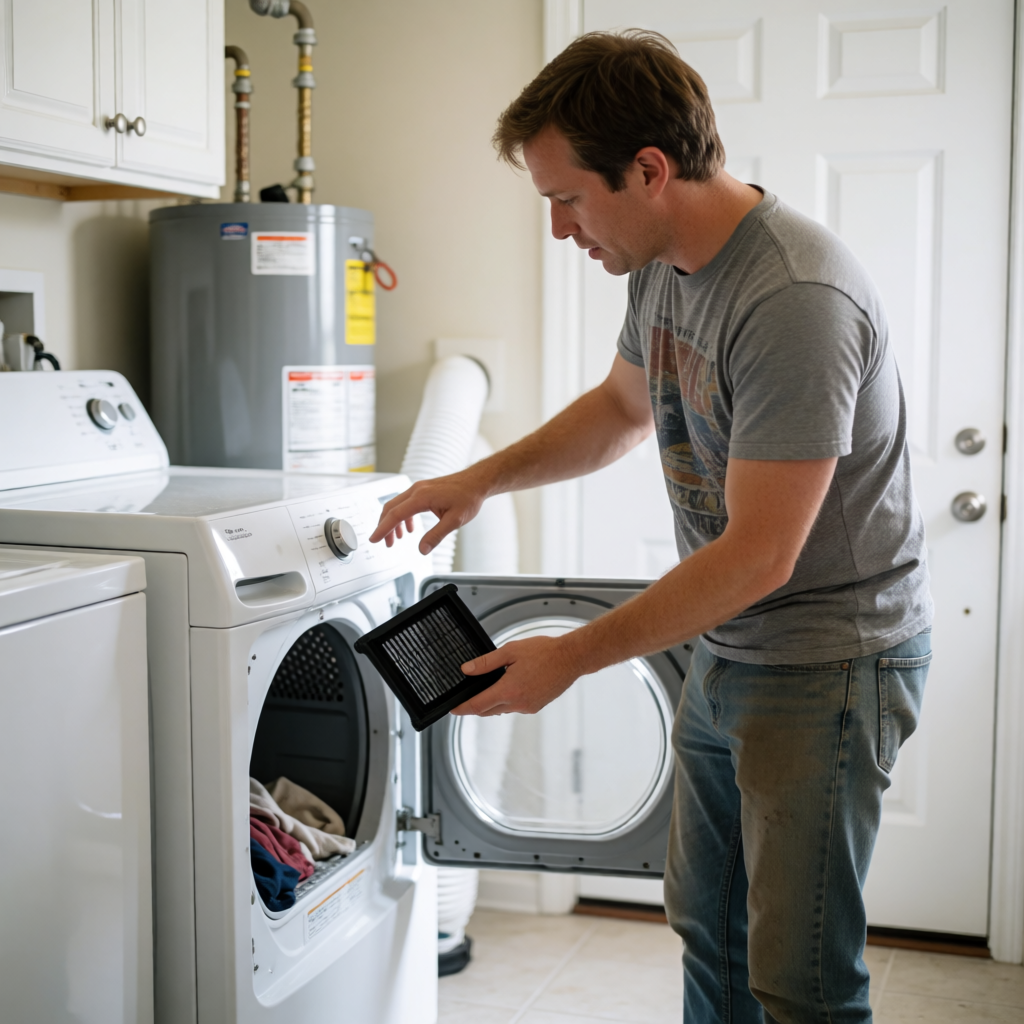
Why Is My Dryer Not Heating?
A dryer that tumbles normally but leaves your clothes cold and damp can be frustrating. The good news is that the problem is not always a failed heating part.
Something as simple as the wrong cycle, a tripped breaker, poor airflow, or a blocked vent can affect drying performance. Other problems, such as a failed heating element, thermal fuse, thermostat, or gas component, require more caution.
Before taking the dryer apart, start with the checks you can safely do from the outside.
Problem: The Dryer Runs but Produces No Heat
You press Start, the drum turns, and the dryer sounds normal—but after a full cycle, the clothes are still wet.
First, find out whether there is no heat at all or whether the dryer is producing some heat but drying very slowly.
Run the dryer empty on a heated timed cycle for several minutes. Stop it and carefully check whether warm air is present. Do not reach into a moving drum.
If there is no warmth, continue with the checks below.
If the air is warm but clothes take much longer than before to dry, airflow may be the real problem rather than the heating system.
Causes: What Could Be Behind the Problem?
Several different faults can produce similar symptoms.
1. The wrong cycle is selected
Some dryers have an Air Only, Air Fluff, or similar setting. These cycles are designed to move air without adding heat.
Check the control panel before assuming something has failed.
2. One breaker has tripped
Electric dryers use a high-voltage supply. Depending on the installation, one part of the electrical supply can still allow the drum to turn while the heating circuit is not working.
Look at the dryer breakers in your electrical panel. If one appears tripped, switch it fully off and then back on.
If the breaker trips again, stop using the dryer and have the electrical problem investigated.
3. The vent cannot move enough air
A crushed hose, heavy lint buildup, or an obstruction in the exhaust path can seriously reduce airflow.
Poor ventilation is particularly important because heat and moisture need somewhere to go. The U.S. Consumer Product Safety Commission warns that lint buildup and restricted exhaust can contribute to overheating and dryer fires.
4. The heating system has failed
On an electric model, the heating element is responsible for producing heat. On a gas model, the burner system performs that job.
A failed thermal component, thermostat, heating element, ignition component, or another internal part can leave the dryer running without heat.
These faults usually require access to the inside of the appliance.
Simple Checks: Start With What You Can See
You do not need to remove panels immediately.
Check the selected cycle
Look at the controls and make sure a heated drying program is selected.
Check the breaker
For an electric dryer, inspect the dedicated breaker(s). If one has tripped, reset it once.
Do not repeatedly reset a breaker that immediately trips again.
Look at the lint screen
Remove the lint filter and clean it completely. A thick layer of lint can interfere with airflow.
Also look inside the filter opening for an obvious accumulation of lint.
Inspect the exhaust hose
Pull the dryer forward only as far as necessary and look at the flexible exhaust connection.
Watch for:
- A sharply bent hose
- A crushed section behind the dryer
- Heavy lint accumulation
- A disconnected hose
Do not operate the dryer with the exhaust system disconnected from the outside vent.
Check the outdoor vent
While the dryer is operating, check whether air is coming out of the exterior exhaust opening.
Very weak airflow—or no airflow—deserves attention before you continue troubleshooting the heating system.
The CPSC recommends keeping the lint screen, exhaust duct, and vent system clean and checking that air can escape through the outdoor vent.
DIY Solution: What You Can Safely Try
Start with the least invasive solution.
Step 1: Select a heated cycle
Make sure the dryer is not set to an air-only program.
Step 2: Reset the breaker once
If you have an electric dryer, reset the appropriate breaker if it has tripped.
If it trips again, leave it alone and investigate the electrical fault rather than repeatedly switching it back on.
Step 3: Clean the lint filter
Remove all visible lint from the screen.
If the filter has a coating that restricts airflow, clean it according to the manufacturer’s instructions and let it dry completely before reinstalling it.
Step 4: Improve the exhaust path
Check the hose behind the appliance for crushing or severe bends. Remove accessible lint or debris from the exhaust path if you can do so safely.
Also inspect the exterior vent opening.
Step 5: Test the dryer again
Run a short heated cycle with the drum empty.
If heat has returned, test it with a small load rather than immediately filling the entire drum.
If the dryer still runs completely cold after these checks, the problem may be inside the machine.
For manufacturer-specific troubleshooting, consult the manual or the support documentation for your exact model. For example, Whirlpool’s official guidance separates basic checks such as cycle selection, breakers, gas supply, and venting from internal heating-system repairs.
What Not to Do
A dryer combines electricity, high temperatures, moving parts, and, in some homes, gas. That makes improvising a repair a bad idea.
Do not bypass a thermal fuse or other safety device. These components exist to protect the appliance from dangerous overheating.
Do not keep using the dryer when the exhaust is badly restricted. Fix the airflow problem first.
Do not repeatedly reset a breaker that keeps tripping. A recurring electrical fault needs proper diagnosis.
Do not open a gas dryer and start testing gas components without the appropriate knowledge and equipment.
Do not replace a heating element simply because the dryer is cold. Confirm the likely cause first; several different components can produce the same symptom.
Do not continue running a dryer that smells strongly of burning, produces smoke, or shows signs of overheating. Disconnect power when it is safe to do so and arrange for qualified service.
When to Call for Help
A professional repair is the better choice when the basic checks do not restore heat.
Get help if:
- The heating element may have failed.
- A thermal fuse or thermostat needs testing or replacement.
- The dryer requires internal disassembly.
- The breaker repeatedly trips.
- Electrical connections look damaged or overheated.
- A gas dryer has a suspected burner or ignition problem.
- You smell gas.
- The exhaust system is inaccessible or heavily obstructed.
- The dryer becomes unusually hot or smells like burning.
Internal heating components can require disassembly and electrical testing. Manufacturer guidance recommends professional service for certain heating-element and thermal-fuse repairs.
If the dryer has a gas connection and you smell gas, do not continue troubleshooting the appliance yourself.
Quick Checklist
Before booking a repair, go through this list:
- A heated cycle is selected.
- The dryer is not set to Air Only/Air Fluff.
- The electrical breaker has been checked.
- The lint screen is clean.
- The exhaust hose is not crushed.
- The exhaust path is not obviously blocked.
- Air comes out of the outside vent.
- The dryer has been tested again after the basic checks.
- No burning smell, smoke, or unusual overheating is present.
If everything above looks normal and the drum still turns without producing heat, the fault is likely deeper inside the appliance.
Bottom Line
When a dryer stops heating, do not immediately assume that the heating element needs replacing.
Start with the cycle setting, electrical supply, lint filter, and exhaust path. These checks can identify several problems without opening the appliance.
If the dryer remains cold after those steps, the next stage may involve internal electrical or heating components. At that point, getting the appliance properly diagnosed is safer than replacing parts at random.
Keeping the lint filter and exhaust system clean is also important even after the dryer is repaired. Good airflow helps the appliance dry efficiently and reduces the risk associated with overheating.
External safety resource: U.S. Consumer Product Safety Commission — Clothes Dryer Safety Alert